5 August 2025
An artificial reef programme aims to restore marine life in Tauranga Harbour.
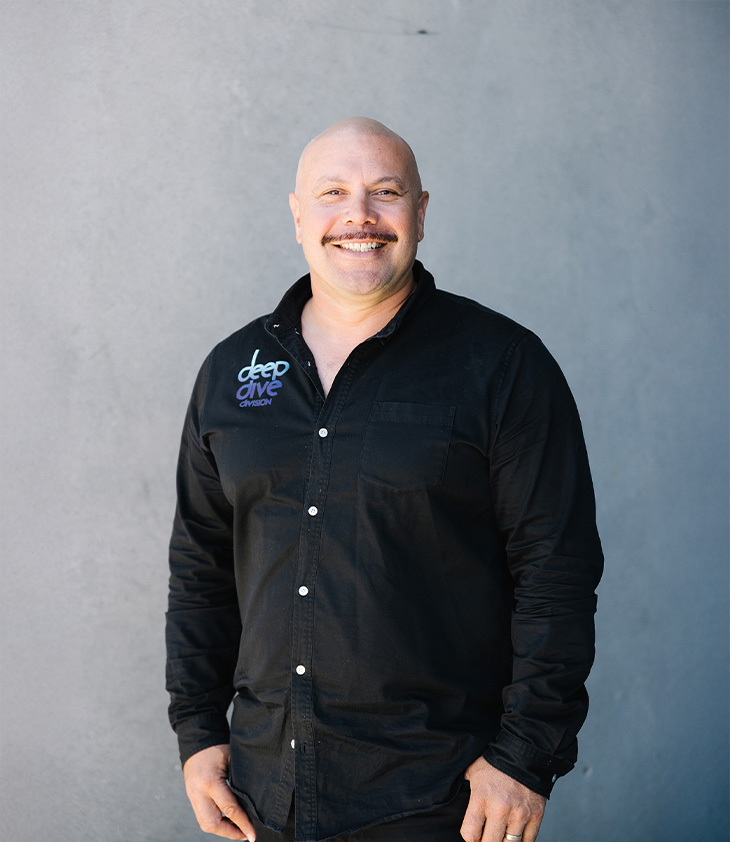
The harbour experienced a significant decline in biodiversity after Cyclone Gabrielle, with a massive build-up of sediment covering reef systems. To address this, Deep Dive Division, led by Tua and Courtney Karalus, has created an underwater reef system to help essential larvae and algae find a new home. The project, involving local iwi and universities, aims to support marine ecosystems and contribute to the “blue economy”. “The rest is the circle of life,” Tua said.
Deep Dive Division is a Hamilton-based company specialising in commercial and scientific diving services across Aotearoa. It is believed to be the only Māori and Pacific-owned dive company in New Zealand, combining Māori perspectives with environmental science and advanced technology. The nine reefs, situated 13 metres deep in Tauranga Harbour, were collectively named Peara, meaning “pearl” in te reo Māori, symbolising the nucleus of change, growth and life. The artificial reefs were also nicknamed “social housing for crayfish”, and are built using natural fibres and marine-grade concrete, along with proven techniques for deploying them to the ocean floor.
The artificial reef systems are designed to biomimic natural marine habitats, helping restore and protect biodiverse native marine life. Six of the structures were manufactured at Hynds Pipe Systems Ltd under the leadership of Hynds Holdings director and R&D director Aaron Hynds, while the remaining three were constructed using a 3D concrete-printing technique. The project was a collaboration between Deep Dive Division, the University of Waikato, local iwi, Hynds Pipe Systems Ltd and the Port of Tauranga. The trial is scheduled to run for an initial 24 to 36 months.
The effects of the artificial reefs on marine life have already become apparent, Tua said. As they began installing the second part of the reef, he noticed crayfish already crawling on the first part. “It went straight to the hole that was designed for it.” Projects like Peara represent a push into the “blue economy” and the early stages of expanding aquaculture. “We embrace this industry because there will be jobs for local people,” he said.
Courtney Karalus described the project as purpose-driven, beginning with surveying water conditions and marine life to understand the situation in Tauranga Harbour in real time. She noted there was also a deliberate emphasis on a New Zealand-led approach to creating the artificial reefs. “Many reef systems going in New Zealand are being bought in from Australia.” Deep Dive Division recognised the strong cultural identity New Zealand has regarding the ocean and freshwater. “We’ve got a marine heritage that we need to acknowledge.” Established in 2018, Deep Dive has been involved in urban ocean agriculture structures, taking a practical, real-world approach to environmental science. The idea for the artificial reef emerged after meeting with partners in Tauranga Harbour. “We were sitting at our home office whiteboard and sketching something up,” she said.
University of Waikato professor Chris Battershill and University of Canterbury professor David Schiel have led Ministry of Business, Innovation and Employment-funded research on marine life loss in the Eastern Bay of Plenty. Battershill has worked closely on the development of Peara, providing scientific guidance on conditions needed for marine ecosystem regeneration. The Peara reefs were designed to support the growth of seaweed and shellfish, act as a wave break and attract marine life. Inbuilt harmonics also help deter whales and reduce the risk of beaching.
By introducing hard substrates, such as natural marine rock or engineered structures like Peara, the reefs offer essential footholds for marine life to grow in sandy or silty environments that typically lack structure. Reef structures and their acoustic properties were designed using mātauranga Māori to support the colonisation of native marine species in harbours. “These native colonisers help resist the spread of invasive species,” Battershill said. Native kelps such as Ecklonia and Carpophyllum forest species, along with mats of turfing red seaweeds, provide habitat for important taonga like crayfish, kina and other invertebrates that also serve as food for fish. “These reef outcrops offer refuge for marine biodiversity that is now rare or absent in the harbour.”